
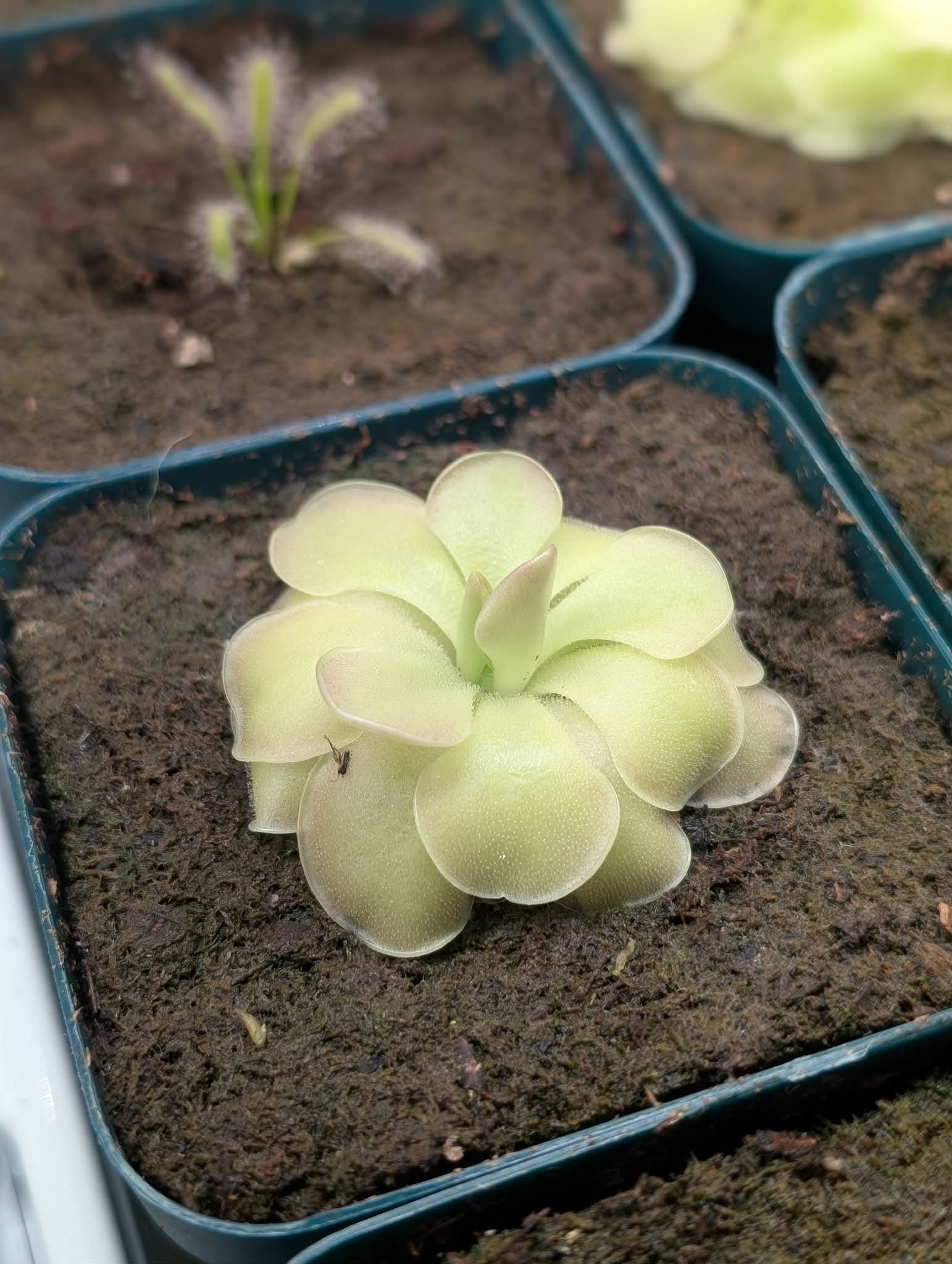
The Trapping Mechanism: "Flypaper" Leaves
The name "Butterwort" comes from the slightly greasy, soft feel of the leaves, which are nature's perfect flypaper.
Sticky Mucilage: The succulent-like leaves are covered in thousands of microscopic glandular hairs that secrete a clear, sticky, slightly acidic fluid (mucilage).
Passive Trap: Small insects, especially fungus gnats and fruit flies, are lured to the glossy surface, mistake the mucilage for nectar, and become instantly stuck.
Digestion: The plant then secretes digestive enzymes to break down the soft body of the prey. Unlike sundews, butterworts generally do not curl their leaves around their catch, making their sticky collection clearly visible.
Essential Care Guide
To ensure your Mexican Butterwort thrives year-round, follow these specific guidelines:
Requirement
💡 Light - Bright light is crucial for compact, colorful growth. A sunny east or west window is ideal, or 12-14 hours daily under strong LED grow lights.
💧 Water Quality - Only Distilled, Reverse Osmosis (RO), or Rainwater. They are highly sensitive to the minerals and salts in tap water.
🌱 Soil - Requires a porous, mineral-rich mix to mimic its limestone habitat. A common blend is 1 part peat moss, 1 part perlite, and 1 part vermiculite or limestone sand.
🌡️ Temperature - Prefers warm room temperatures, 60F to 85F (15C to 30C). They are best grown as indoor houseplants.